This morning, as I sat on the couch drinking my Earl Grey tea and listening to my husband snore in the other room, I reflected on a recent conversation I had with a friend. We were talking about our work as CNAs at the hospital and how it differs from that of CNAs in nursing homes.
There’s less lifting, fewer bathroom trips, and baths are generally less intensive, as most patients are able to bathe themselves. Typically, there’s a quick turnover—patients don’t stay long—except for our “frequent flyers,” many of whom we come to love in our own way, or at least feel some sympathetic connection toward.
But one thing seems constant: you are only as valuable as what you produce—how fast and efficiently you complete your rounds, the number of baths given, charts completed, supplies scanned, and the cleanliness of your patients’ or residents’ rooms. That stuck with me. You’re only as valuable as what, and how much, you can produce. It’s no different than an air conditioning unit: how well you cool the room and how efficiently you run.
So, what are you producing outside your job responsibilities? We all put something into the atmosphere—our attitudes, our appearances, our conversations. What would the workplace look like if we valued these just as much? What if, alongside attendance rewards, we recognized the best-maintained attitude or the most empathetic care for patients or residents? What if we changed the scoreboard?
Every workplace requires a certain level of competence in measurable skills: multitasking, efficiency, teamwork, or the ability to work independently. I’m not suggesting we remove value from those skills, but rather that we add something else to the criteria. Unfortunately, we’re still far from employers truly recognizing and rewarding qualities like empathy, patience, and integrity. Leadership often has a limited—or distorted—view of the people who work for them.
We’ve all seen it: the coworker who gets the most praise because every time the boss turns the corner, they put on a show of stellar performance. But as soon as the boss leaves, they drag them through the mud—or worse, boast about being the one who “really runs the place.”
That’s why it falls on us—as leaders, coworkers, friends, and human beings—to pay attention to what we put out into the world. You can’t have a toxic attitude and expect it not to affect the room when you walk in. Sometimes, the environment depends on you.
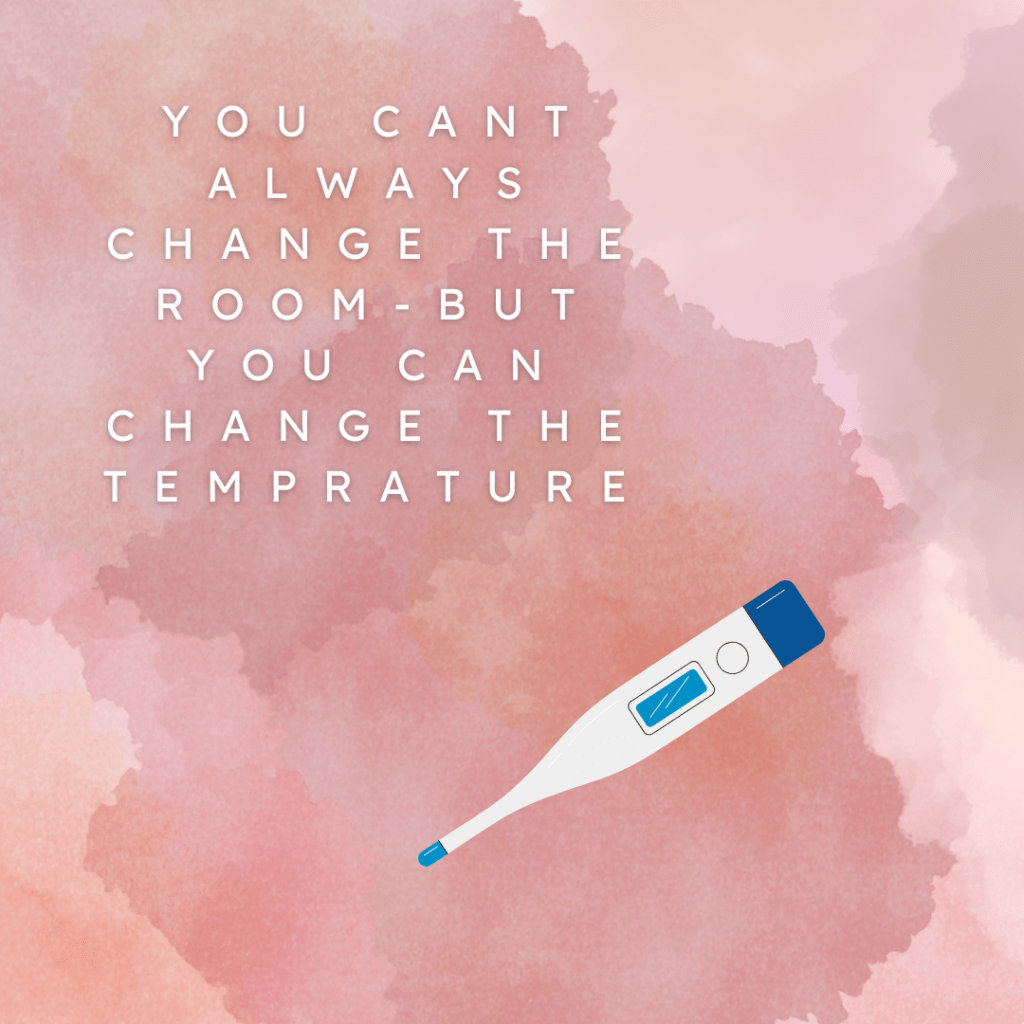
You can’t always change the rooms you have to walk into—but you can change the temperature.
> Your turn: How do you change the temperature in the rooms you walk into? Drop a comment and share this with someone who needs the reminder.
 Rainey Days Pass
Leave a comment